The end of the school year is a challenge for both students and teachers - both are counting down the days until summer break. I try to keep the structure of the day the same, but introduce some new things to keep everyone interested. My colleague, who teaches the math and science block, had the kids do an inquiry investigation making an impact-proof container for a raw egg, and then conducted the launches the last couple days of school. Anyway, we were chatting one day and I was telling her that I was feeling the need to encourage our students to keep reading over the summer, and that I had read about a teacher who used Instagram to connect with her students. My colleague, who has a child in fourth grade, said that many of the kids in fourth and fifth grade were already on Instagram, and that might be a great way to reach out to them.
I did a little checking on our technology policies, and found that it was okay to start an account, but we needed to commit to regularly updating it so that parents and students would find it helpful. We were willing to try that. I would do the reading and writing posts, and she and our other colleague would do some math and science posts.
The other thing we did is send out a letter to parents of our outgoing fifth graders and also to the upcoming fifth graders letting them know about our idea. We set it up so we have to approve anyone who wants to follow us, so not anyone can see our posts. My colleague also suggested that we create a Facebook page that is linked to our Instagram account, since more parents are on Facebook than on Instagram.
After sending out our letter, we were surprised and delighted to see how many parents signed up to follow us! We started this the last two weeks of school (which helped keep us engaged during that time), and we started taking pictures of student work and of course, the progress of the egg launch. I posted pictures of shared stories, social studies projects, and recommendations written for the incoming fifth graders by the current fifth graders. The kids seemed to really like seeing their work on Instagram, and would often comment on the pictures.
We've been out of school for a little over a week now, and it's been very easy to post a picture of a book every day. I go to the library often, and every time I'm there, I take about 5-7 pictures of book covers that I can use each day. I'm trying to remember to include different genres and multicultural books, both current titles, and ones that I loved as a child.
I'm also trying to include a journal idea each day. I have no idea if any students will do any writing over the summer, but since many parents are following us on Facebook, it may encourage some of them to help their kids give it a try.
The real test of this will be in the fall, when we start to get to know the new group of fifth graders. I'm very interested to know how many tried the book or journaling suggestions, or tried the real life math and science ideas my colleagues are posting. We're hoping this added connection will give both parents and students a bigger picture of what goes on in our fifth grade classes, and in turn, this will make our school community stronger.
Friday, June 19, 2015

Sunday, April 26, 2015
Animating Poetry
We've just finished a poetry unit, and in addition to turning in hand-written copies, I've encouraged the students to type at least one poem into their Kidblog, and also to consider animating one on Animoto. I used Animoto a couple of years ago to make book trailers, but hadn't used it since. However, at a recent meeting I was at, the presenter was going over tech tools kids could use to publish their writing, and I remembered the fun we'd had making book trailers. Luckily there was a bunch of work time at that meeting, so I set up another Animoto account, and got my kids going on it the next day.
Animoto is designed to put pictures and text to music, playing completed works like a very short movie. My students typed in their poems, selected some pictures or short video clips that Animoto provides, and then selected music to go along with their work. If they had done this from their own home computers, they could have pulled in their own music or photos, but I kept it simple to start with, just using what Animoto provides.
Here's an example of a poem for two voices that two girls did: Animoto soccer poem.
If you want to try this with your students, here is hopefully the fastest way to set up an Animoto account. I first signed up for a free two-week trial. Then I went to their free 6 month trial for educators page. Once you sign up there, they will send you a code to type in when you set up your account. They recommend setting up a new gmail address for Animoto, which I did, and then I set up my student accounts. They say you can set up 50 student accounts, but I just set up 8, because it's a little time-consuming, and I decided the kids could all share these accounts, which has been fine so far. To set up the student accounts, you will need to log out of your account, and then click "sign up" for each new student account. As per another Animoto recommendation, all the student accounts are my gmail address with the addition of +1, +2, etc.. (that's a plus sign), so if my email was mrsquist@gmail.com, my first student account would be mrsquist+1@gmail.com. In order to keep things simple, all the student accounts have the same password. We had a discussion about only working on your work and respecting the work of the other students sharing the accounts by not editing anything that wasn't yours.
The students have really enjoyed selecting backgrounds and music for their poems, and I like the creative thinking that goes with those choices. Students whose poems are about darker subjects have had to think about what style of music would best represent their topic. We've chatted about whether songs with words are too distracting when you're reading a poem, so maybe a choice of instrumental music would be better.
Several students have also made book trailers to "advertise" a book they've read. They storyboard out what they want to say, giving a teaser about what the book is about, but not revealing the ending, and then type it in just like the poems. There are certainly other online tools kids can use to publish their writing, but Animoto is very easy once you set it up, and the results are fun to see.
Animoto is designed to put pictures and text to music, playing completed works like a very short movie. My students typed in their poems, selected some pictures or short video clips that Animoto provides, and then selected music to go along with their work. If they had done this from their own home computers, they could have pulled in their own music or photos, but I kept it simple to start with, just using what Animoto provides.
Here's an example of a poem for two voices that two girls did: Animoto soccer poem.
If you want to try this with your students, here is hopefully the fastest way to set up an Animoto account. I first signed up for a free two-week trial. Then I went to their free 6 month trial for educators page. Once you sign up there, they will send you a code to type in when you set up your account. They recommend setting up a new gmail address for Animoto, which I did, and then I set up my student accounts. They say you can set up 50 student accounts, but I just set up 8, because it's a little time-consuming, and I decided the kids could all share these accounts, which has been fine so far. To set up the student accounts, you will need to log out of your account, and then click "sign up" for each new student account. As per another Animoto recommendation, all the student accounts are my gmail address with the addition of +1, +2, etc.. (that's a plus sign), so if my email was mrsquist@gmail.com, my first student account would be mrsquist+1@gmail.com. In order to keep things simple, all the student accounts have the same password. We had a discussion about only working on your work and respecting the work of the other students sharing the accounts by not editing anything that wasn't yours.
The students have really enjoyed selecting backgrounds and music for their poems, and I like the creative thinking that goes with those choices. Students whose poems are about darker subjects have had to think about what style of music would best represent their topic. We've chatted about whether songs with words are too distracting when you're reading a poem, so maybe a choice of instrumental music would be better.
Several students have also made book trailers to "advertise" a book they've read. They storyboard out what they want to say, giving a teaser about what the book is about, but not revealing the ending, and then type it in just like the poems. There are certainly other online tools kids can use to publish their writing, but Animoto is very easy once you set it up, and the results are fun to see.
Wednesday, March 11, 2015
Speed Dating With Books
Last week I decided it was time to
start a new round of literature circles, but instead of me giving the book
talks before kids chose what they wanted to read, I tried an idea I got from
someone (maybe Donalyn Miller?). I
told the kids we were going to be doing some speed dating (lots of giggles – it
is spring in fifth grade) but with books. There were probably some disappointed kids, but also a few
who were no doubt relieved.
Anyway, the gist of speed dating with books is to spend a couple of
minutes looking at the cover, reading the back blurb, and then reading as much
as you can of the book before the timer goes off. Make a note of your first
impression, and then move on to the next book.

I had ten different books set out,
and handed out some writing paper for notes. I set the timer for three minutes, and the reading began.
After the timer went off, I encouraged them to give it a rating of some kind
(my ESL colleague suggested the standard 5 star rating, which worked really
well), and then the kids all moved over one chair. I set the timer again, and
the kids started in on the next book.
It was one of the quietest 30 minutes I’ve had recently, and I am pretty
sure some kids read more in that 30 minutes than they usually do at
school. When they were all done, I
had them rank their first three choices, and then I put them into groups based
on their choices.


I would definitely do this again –
I think at this point in the year, the kids know themselves as readers well enough
to be able to make a decision without my giving the book talk. Some kids still
chose books that I am not sure they’ll be able to finish, but for the most
part, I kept them with their choices. We’ll see if they are still happy with
their choices when they’re done with the book!
Saturday, February 21, 2015
Tweets about Reading
It's been a while since I've done any blogging, and I think part of that is because I'm not sure I've done anything really new and different to blog about. My fifth graders are moving along, and we've been working on writing realistic fiction stories, and reading responses, and creating posters with nonfiction text features just to try and mix up the way they write about their reading. But it's now the middle of February, and things that were once fresh seem to be not so fresh, and I think both students and their teachers start looking for ways to mix up the daily work a bit.
I was scrolling through my Twitter feed, and found a link to a poster called "101 Ways to Show What You Know." I squinted at it on my phone, but I was intrigued. I needed some new ideas for students to write about with their reading, but the standard one-paragraph response was old for all of us. (Here's a link to that poster.) And then it hit me: it was a short week, and the kids wouldn't have had as much time for reading, so they needed something short. Like a tweet. Even though I don't have a class Twitter page, the kids could still write a couple of 140-character tweets about the plot, the setting, characters or character change, or if it was nonfiction, something interesting that captured their attention about whatever it was their book was about. I assigned them the job of writing at least two tweets, and they could include an appropriate hashtag, probably using the book title.
They seemed to love it. For one thing, they were thrilled it wasn't 140 words, just characters, including spaces between words. Then I had them type them into our Kidblog page, so they could see what other kids had written. I was taken with how funny I thought many of them were, but also how much information they could put into a short response. Below are some of the results:
The ring: twist it once or twist it twice, but think twice before you twist it #Monster Ring
Big Gruff is totes too big for the troll so Gruff throws the troll off the bridge #Fat Billy Goats
I was scrolling through my Twitter feed, and found a link to a poster called "101 Ways to Show What You Know." I squinted at it on my phone, but I was intrigued. I needed some new ideas for students to write about with their reading, but the standard one-paragraph response was old for all of us. (Here's a link to that poster.) And then it hit me: it was a short week, and the kids wouldn't have had as much time for reading, so they needed something short. Like a tweet. Even though I don't have a class Twitter page, the kids could still write a couple of 140-character tweets about the plot, the setting, characters or character change, or if it was nonfiction, something interesting that captured their attention about whatever it was their book was about. I assigned them the job of writing at least two tweets, and they could include an appropriate hashtag, probably using the book title.
They seemed to love it. For one thing, they were thrilled it wasn't 140 words, just characters, including spaces between words. Then I had them type them into our Kidblog page, so they could see what other kids had written. I was taken with how funny I thought many of them were, but also how much information they could put into a short response. Below are some of the results:
The ring: twist it once or twist it twice, but think twice before you twist it #Monster Ring
Big Gruff is totes too big for the troll so Gruff throws the troll off the bridge #Fat Billy Goats
Just Hates Ms.Godfrey because he just hates her #Big Nate
Monsters, Nightmares, Dangerous Gods, Can't I have a normal life#Percy Jackson
He paid $5.00 for a kiss? o.m.g #kissing booth #Dork Diary
The Story Of Helen Keller Was SO SAD Cause Helen Keller Was Blind And Deaf # SO SAD
I don't want to go to another school next year, I'm going to fail school so I can stay with my teacher #failschool#mrteruptfallsagain
I've got a request in to see if I can set up a class Twitter account, so more families could see some of these ideas, but for now, the kids can read them on Kidblog. I will certainly try this again this year, because it made writing a reading response a bit more fun.
Sunday, October 19, 2014
Talking and Writing About Reading
My best friend since eight grade happens to be a middle school librarian, and whenever we get together, we eventually talk shop. She's got lots of great ideas about book titles and writing about books, and this summer when we were traveling together to celebrate a milestone birthday (we're two weeks apart in age), she mentioned a book they'd gotten in at their library called Getting Beyond Interesting: Teaching Students the Vocabulary of Appeal to Discuss Their Reading by Olga M. Nesi. While it's aimed more at middle school, I figured that I could use it in fifth grade, and boy, have I ever.
The first or second day of school, I had students do a writing response to a picture book I read. I gave them a few guidelines, but I really just needed a baseline sample for what kinds of writing they could do about their reading. Most wrote a couple of vague sentences, and none were in any way outstanding in their analysis. The day after, I started introducing the terms that Nesi uses in her book: tone, pace, characterization, and story line. I had the students write down a general definition of each in their reading notebooks for reference, and then I handed out a "bookmark"from Nesi's book with the different terms and some examples of each. For tone, students could choose from bittersweet, humorous, melancholy, etc... Pace included gentle, lively, or fast. Characterization included describing characters as believable and relatable, or quirky, among others. Story line asked students to think about whether the story was more action based or character based, and we discussed what that might look like in a story. As I read the day's story, students were given time to check off terms on their bookmarks that they thought fit the story we were reading.
After a group discussion of what they thought the story was in each category, we proceeded to write a short paragraph using these terms. What a difference having some language to use made in these paragraphs! Students were talking about why they thought the pace was gentle, or why the tone was bittersweet. Having some terms to use made them analyze their reading more closely and made their discussion more specific; instead of saying, "I really liked the book," now they were able to tell what it was about the book that made them like it.
Eventually, we moved to writing a paragraph about one of the terms, instead of all of them in one paragraph. This has allowed students to deepen their thinking, giving several examples to support their thinking rather than just one. Their final writing project this trimester is a literary essay, and for that, they will need to pick three of the four terms, write paragraphs to support their thinking, and include an introduction and conclusion. We have talked about what happens if you didn't like the book, and how you could say, for example, that the pace was slow, which did (or did not) fit the story, and that you don't like books with a slow pace because they don't capture your attention (or whatever your reason is). As the year goes on, I hope that the usage of the terms becomes more automatic, and that kids will be talking about them when they recommend books to one another. Having some vocabulary to discuss their thinking has really made a difference in my classroom this year.

The first or second day of school, I had students do a writing response to a picture book I read. I gave them a few guidelines, but I really just needed a baseline sample for what kinds of writing they could do about their reading. Most wrote a couple of vague sentences, and none were in any way outstanding in their analysis. The day after, I started introducing the terms that Nesi uses in her book: tone, pace, characterization, and story line. I had the students write down a general definition of each in their reading notebooks for reference, and then I handed out a "bookmark"from Nesi's book with the different terms and some examples of each. For tone, students could choose from bittersweet, humorous, melancholy, etc... Pace included gentle, lively, or fast. Characterization included describing characters as believable and relatable, or quirky, among others. Story line asked students to think about whether the story was more action based or character based, and we discussed what that might look like in a story. As I read the day's story, students were given time to check off terms on their bookmarks that they thought fit the story we were reading.
After a group discussion of what they thought the story was in each category, we proceeded to write a short paragraph using these terms. What a difference having some language to use made in these paragraphs! Students were talking about why they thought the pace was gentle, or why the tone was bittersweet. Having some terms to use made them analyze their reading more closely and made their discussion more specific; instead of saying, "I really liked the book," now they were able to tell what it was about the book that made them like it.
Eventually, we moved to writing a paragraph about one of the terms, instead of all of them in one paragraph. This has allowed students to deepen their thinking, giving several examples to support their thinking rather than just one. Their final writing project this trimester is a literary essay, and for that, they will need to pick three of the four terms, write paragraphs to support their thinking, and include an introduction and conclusion. We have talked about what happens if you didn't like the book, and how you could say, for example, that the pace was slow, which did (or did not) fit the story, and that you don't like books with a slow pace because they don't capture your attention (or whatever your reason is). As the year goes on, I hope that the usage of the terms becomes more automatic, and that kids will be talking about them when they recommend books to one another. Having some vocabulary to discuss their thinking has really made a difference in my classroom this year.
Sunday, September 21, 2014
Word Art
One of the areas we know we need
to work on as a school is vocabulary. With a number of second language
speakers, this becomes even more important, and with the increasing academic
vocabulary as the students move up through the grade levels, knowing the
meanings of words is critical. While I love learning about words, this love isn’t always
shared by my students, and I’ve given a lot of thought to ways to make learning
new words more engaging, and not just a “drag out the dictionary and copy down
the meaning” exercise.
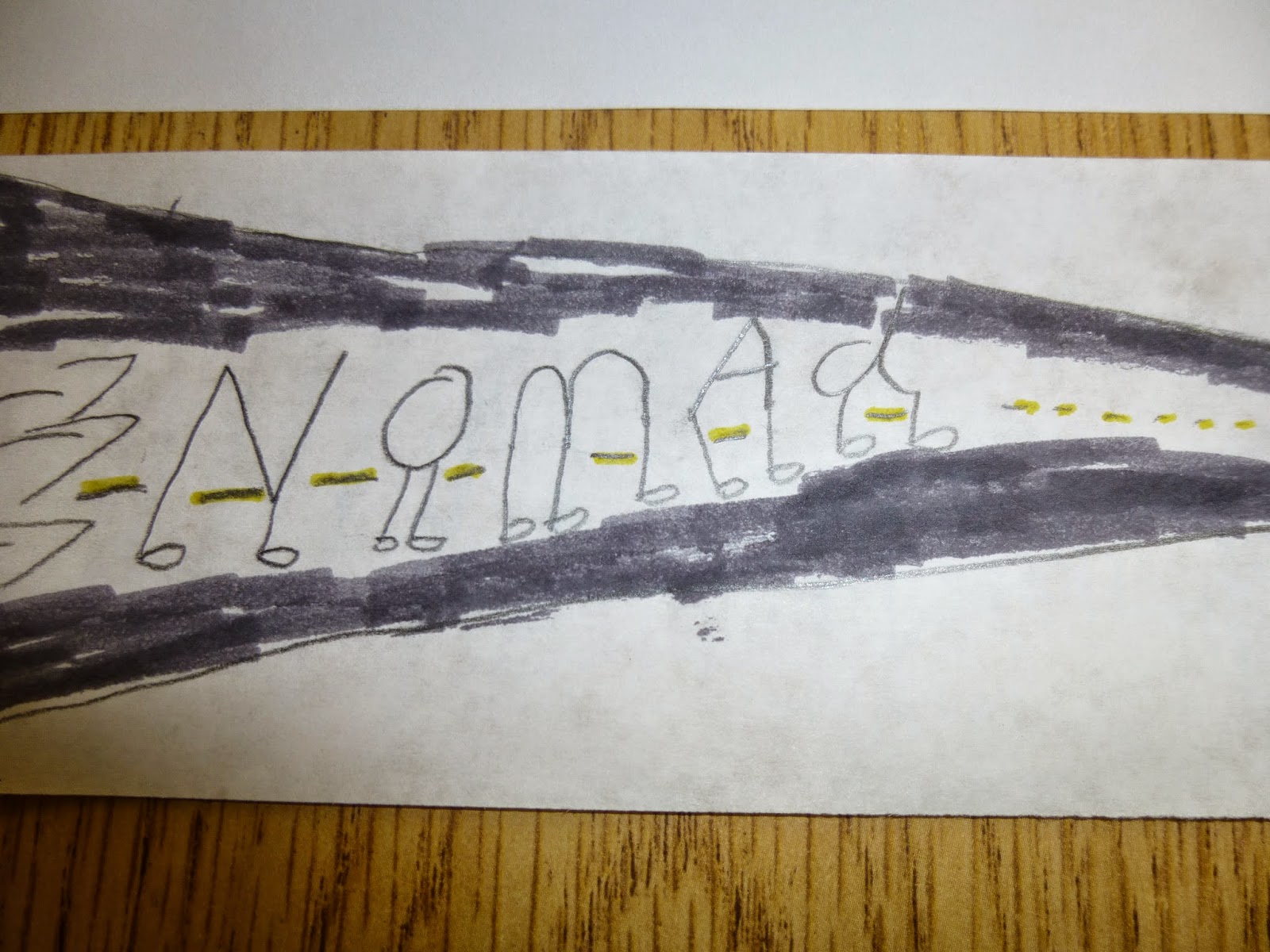
One thing I tried this week was “Word
Art”, another idea I got from the book Learning in the Fast Lane, by
Suzy Pepper Rollins. Kids take the
word and use it to draw something that represents the meaning of the word but
still incorporates the letters. I used the vocabulary words from our first
social studies unit on First Americans, and gave the kids a choice about which
word to illustrate. Many chose “migration”, and used the letters to show the
word “moving” across the paper. One student illustrated “nomad” by having all
the letters walking with feet. One of my Muslim students chose “stereotype” and
included a picture of a woman in a headscarf using the letter “o”. I think this
would be a fun activity to use in any subject area, and I plan to have it as an
independent activity during guided reading and intervention times. I posted
them on the wall so students will have a chance to see how others illustrated
each word, and also so the current unit’s vocabulary is on display while we are
in that unit. My colleague found a bunch of adding machine tape and we cut up
long strips for the kids to use, which they also enjoyed. I’d recommend this if
you’re looking for something a little different to do with vocabulary!


Saturday, September 13, 2014
Six-Word Memoirs
The school year has begun, and this year I’ve looped up to
fifth grade with my two groups of kids from last year. So far I have loved
coming back and just starting in – it seems like we just had a long weekend,
and we’re back at it. But one of my concerns was making sure that fifth grade
didn’t just feel like a repeat of fourth grade, so I knew I had to alter the
routine a bit, and start with something we didn’t do last year.
The May 2014 issue of The Reading Teacher featured an
article called “Every Word is on Trial: Six-Word Memoirs in the Classroom,” by
Jane M. Saunders and Emily E. Smith. Students work to come up with six words
that describe them or something they are interested in, and then find an image
to enhance their memoir. That sounded like something doable (six words isn’t
many), fun (computer lab), and it would be a great way to start and finish a
writing project the first week.
Following the suggestions in the
article, we first looked at Ernest Hemingway’s famous memoir, “For sale: baby
shoes, never worn.” It was a great
place to start, as we did a lot of inferencing about what he could have meant.
I then pulled up some examples on brainpickings.org of elementary six-word
memoirs (www.brainpickings.org/2013/01/09/six-word-memoirs-students), which
gave my students some ideas for their work. I was careful to stop at the middle
school level, as some of the examples are a little racier than I wanted to
share with my class. Then students
all worked to come up with several examples, discussing with classmates if they
were short a word or had too many. It was fun to see the discussions of how to
condense ideas, or how to change words around to get the best effect.
Punctuation also becomes important if you aren’t writing complete sentences, so
some students experimented with colons and commas.
After choosing the memoir they
liked best, we headed into the computer lab. The article gives many great
suggestions of how to present the memoirs, but in the end, I just had students
open up a Word document, and then we searched for images on Flickr as they did
in the article. Once an image was selected, students dragged them into the Word
document, and then typed the memoir below the image. We printed them off in
black and white, and then students had the option of using colored pencils to
make them more colorful.
I hung them all up outside our
room, and students have really enjoyed reading what others have written.
Several staff members have also commented on how nicely they turned out. One
colleague suggested doing this periodically throughout the year and using them
as a chronicle of fifth grade, which I really like. I also think students could
do this as a short way of synthesizing information from other subject areas. I’m
going to experiment with this writing form throughout the year and see what I
think. For now, it was a great way to start our new year off together.

Here is my example that I showed the students.


Saturday, June 14, 2014
Standards Walls
Standards Walls
Earlier this spring, a co-worker loaned me a new book called
Learning in the Fast Lane by Suzy Pepper Rollins (ASCD). It has a lot of good ideas for helping
all students succeed. One of the
suggestions was to create a standards wall. At our school, we’ve been encouraged to post learning
targets, which I dutifully did, but they’re in small font and there are so many
of them, that they were basically meaningless for both me and the students.
 |
| Sorry - I can't figure out how to rotate this image! |
Rollins suggests posting the standards and learning targets
as a concept map up on the wall. As you move through the learning targets, an
arrow tracks your progress. Instead of standards written and posted where
nobody can see them, now everyone – both students and teachers – can see
exactly what you are learning, and where you’ve been, and where you still need
to go.
I decided to try this with our last social studies unit on
the West, and also for our narrative writing unit. I found it was very helpful
for social studies, because it really helped me tell the kids each day what our
learning target was, and then I could point out what we had already done and
where we were going. The narrative chart was helpful, but I found that in
teaching writing, there are often many things going on at once that kids need
to be aware of, and moving the arrow was less helpful. However, just having the
“I can” statements that go with the learning targets posted on a readable
poster was very helpful.


Rollins also suggests posting examples of student work by
the learning targets, and I did post my own examples of what we were working on
for the narrative unit. I liked being able to show kids who were absent what
the rest of the class had worked on, and showing examples always helps. I will
try to post more student work next year.
I’m definitely going to do this for social studies next
year, because those units change, but I’m thinking that I may be able to do one
concept map for reading and one for writing, since those subjects have a
different structure than social studies does. At any rate, having a big,
readable poster really helped me to chart our learning progress. And luckily, I
have all summer to try and plot out the standards walls for the fall.
Sunday, May 25, 2014
Revision: A Guest Post
Tom is one of my oldest professional colleagues. He's younger than me, so not that kind of old, but we've both been at the same school for over twenty years, making us some of the old timers now. For the last decade or so, he's been teaching mostly math, but when he's not doing that, he's writing. His writing career started at an early age, and he's been writing ever since. I knew this about him when I decided to take on the National Novel Writing Month challenge a few years back. I am going to take credit for convincing him to give it a try, and he has kept going with it, long after I quit. He knew he had some good stories to tell, and for the last couple of years, he's been pursuing finding an agent for one of his NaNoWriMo books. Happily, this is the year for him, as he signed with an agent who is excited about his middle grade book, FOLLOWING INFINITY. We decided to do guest posts on each other's blogs, and I asked him to share some thoughts on revision, which is a challenge for most of us, no matter what our writing ability.
Our district began specializing in intermediate grades ten years
ago, which means I haven’t formally taught anything to do with writing since
2004. There have been times I’ve missed working with a curricular area I’m so
passionate about, but when I read Betsy’s blog and learn of the strategies she
incorporates into her classroom, I’m reminded of what an uphill battle it can
be to engage elementary students in writing. Then it seems that maybe working
with numbers and shapes isn’t so bad after all.
In a post Betsy wrote about revision, she described how she had
students pair off to share their writing and offer each other suggestions about
how to improve their work. Too often the students would report back to her that
the writing was already good enough so no changes were necessary. Speaking as a
teacher, hearing a comment like this would have me mentally roll my eyes and
redirect the students to try digging a little deeper, and give them some
direction of what to look for. To hear this comment as a writer could quite
possibly drive me into pulling my hair out. To put it simply, a lot of what
people would think of as writing takes place in the revising. I’ve made the
comparison for people that drafting a manuscript is a lot like a sculptor
getting their hands on a massive lump of clay, and the revising that follows is
when that clay is gradually molded into art. To highlight my point I decided to
keep track of how many times I’ve made changes to this post you’re reading
before I decided it was ready to send to Betsy. Updating this paragraph will be
the last thing I edit before I send it, so I can now say I’ve read and revised
this post in some way at least twenty different times.
I thought it was great Betsy was trying to get her students to
work with critique partners, since that’s what many aspiring and professional
writers do. The trick is finding people who will understand what you’re trying
to accomplish, even if they don’t necessarily share your vision, and will be
able to read critically and provide you with honest feedback. I’ve been lucky
enough to have a small group of people over the years (Betsy being one of them)
I’ve been able to rely on as some of my first readers. Collecting opinions from
different people helps you identify any problems you might not see yourself
because you’re too close to the work. If you have a lot of people identify how
something about your story isn’t working for them, it’s pretty clear that needs
to be addressed. But sometimes you’ll get contradicting feedback and you have to
go with your gut on what to do. Example: Last summer a teacher friend read
through a middle grade manuscript I had just finished revising. She gave me
some great feedback, including points about one particular (and I’d say
pivotal) scene that left her feeling so disturbed she had to stop reading and
walk away from it for awhile. It made me wonder if I had pushed the moment too
far for the age group of the target audience. Fast forward to eight months
later when I received revision notes from my agent Carrie, who also had
comments on that same moment but in the opposite direction. Hearing from
different people, especially regarding a scene that could be polarizing, helped
me clarify why it was important to keep it; ‘disturbed’ was the reaction I had
been going for after all, and it worked. But without the benefit of outside
opinions to consider I may not have reflected on that scene the way I did, and
as a result I might have missed out on newer ideas that stemmed from that
moment.
I’ll admit, when the revision notes came in from my agent I
opened them with an equal mix of excitement and trepidation. We’d already
discussed an overview of her ideas during a couple of phone calls so I knew
what to expect. I was looking forward to seeing her specific notes and getting
back to work because I knew she understood what I was going for and saw ideas
to explore that would make the manuscript even better. But it meant a lot of
revising to do on a project I’d already done a fair amount of heavy lifting on
three or four times before. Her feedback wasn’t exactly “I love this so much,
now go back rewrite the whole thing,” but some of the changes she suggested
were big: edits that could result in removing entire chapters, developing
characters she wanted to see more of, cutting some characters out, redefining
the relationships between others, and expanding on sections of the story to
develop the overall progression. This was no thirty seconds of us standing in
the back of the classroom and then me telling Mrs. Quist that “my partner
thought it was good so I don’t really have to change anything.”
But if I hadn’t gotten that kind of feedback, I would have been
disappointed. For her to think about the manuscript so critically shows me how
invested she is in seeing this become something more. And I have to say, it
was both reassuring and a little scary to know just how dead-on her
suggestions were. With the work I’ve been able to do on it so far, I can
already see the new directions the story will go and what it will be like when
it’s finished.
And once it is, you can bet I’ll be anxious to hear Mrs. Quist’s
opinion.
If you would like to read more about Tom's writing life, plus a host of other topics (he has an extensive music collection, views a variety of movies, and is generally a reflective kind of guy), I recommend you check out his blog What I Did On My Summer Vacation. http://ernieyoureafool.blogspot.com
Saturday, May 17, 2014
On-line posters
Next year I’ll be doing something new: all of our fourth
grade teachers will be looping up to fifth grade, keeping our same classes that
we’ve had this year. I’m very excited about this for a number of reasons. I’ve
been in fourth grade for thirteen years, and I’m feeling like I need a
curriculum change, and I’m glad I’m moving up as I like the complexity of the
content as the grades move up. I’m also happy to be spending another year with
these kids; we’ve had a great group and I’m glad I can continue on with them.
That being said, I know that I need to mix things up a bit
for next year, and provide new opportunities for these students so that it
doesn’t seem like a complete repeat of fourth grade. One area I plan to have
kids use more often is technology in the classroom. They need to be able to comfortably word process a
page-length document by the end of fifth grade, and I know that much of their
work in middle school will be done and turned in on computers, so I want to be
sure that they’ve had opportunities to do that in my classroom before moving
on.
I also want to hit the ground running in the fall, since I
don’t have to take all the time to get to know them like I have all the other
years, and to that end, I’ve started to introduce some things that we can
practice now, and then hopefully just review a bit before putting it into
independent practice in September.
One project we’ve tried is making multi-media posters using
our district’s Discovery Education account. Each student has a user name and
password, and once they log on, they can begin to use some of the tools
Discovery Ed has. I had my students
make multi-media posters about the Dust Bowl, since we had just read a
nonfiction text in guided reading. Using the Board Builder program, students
were able to include text boxes, still photos, and maybe best of all, short
movies from the Discovery Ed collection, all to give the best information they
could about the Dust Bowl.
The posters are far from perfect, but the students were very
engaged each time they had a chance to work on them. They especially liked
selecting movies (no surprises there), and many included more than would be
ideal on their posters. It would be great to have them look at each other’s
posters and offer suggestions, and I may get to that this spring, but that
would be a definite skill to practice in the fall. They were also quick to pick up the basics, and helped each
other out, making it much easier for me to get around to help on more difficult
tasks. They could even access this account from home, and a few students did
that.
I’m including a couple of examples of posters below; there
could be all kinds of discussions about how effective or distracting the
backgrounds are, if there is enough information in the text boxes, and what
else is needed to make the poster more easily understood. But it’s a start for
now, and will definitely be an option for “showing what you know” in the fall.


Saturday, April 26, 2014
Exploring Text Structure
It’s been a while since I felt like I’ve done anything new,
but spring is kind of here, and with it comes restlessness that needs novelty.
I don’t know if this counts as novelty, but I’ve been excited by the thinking I’ve
seen the last couple of days in my classes.
Our latest reading unit is on text structure, which, for
some reason, I just couldn’t get my head around. I understand that it is how
text is organized, and that there seem to be more text structures in nonfiction
than fiction, at least for fourth graders, but I don’t think I could really see
why spending a lot of time with this topic made sense. In order to try and get
more out of this, I reread the structure chapters in Falling in Love with
Close Reading, and I decided to make a checklist for my students to use. I
took an opinion piece about school uniforms that students were supposed to
read, and copied that piece along with a structure checklist, and gave it to my
students. Then we proceeded to read the text together.
As we went through the piece, students could see that the
point of the writing was to convince the reader that school uniforms were
great. Then we continued to read, finding examples of claims, counterpoints,
and descriptions. Finding and naming what the writer was really doing in the
piece was interesting to me; I’ve done similar things in the past, but I liked
breaking down the structure even more specifically. Students color-coded the
different structures, underlining each in a different color, so that when we finished, it was clear that in this
opinion piece, the writer used claims more than any other structure to get his
point across.
The past couple of days, we’ve spent reading a book called Farm
Workers Unite, which tells about Cesar Chavez and his work starting the
United Farm Workers union. We did the same thing with the structure checklist,
reading the introduction, and then a chapter about the life of migrant workers.
For that chapter, I had the kids work together to “code” the text structures. I
then asked them to identify the structure used the most often, and to tell why
they thought they writer used that the most for that chapter. It didn’t take
long for the kids to notice that it was almost all cause and effect writing.
The hard part (but for me, the most interesting part) was thinking about why the author used that
structure. One student pointed out that it was very different from the introduction,
which led us to chat more about why that would be. I pointed back to the title of the book, and then a number of
kids got more animated. “The writer has to show how bad it was for the migrant
workers, so that he can explain why they decided to unite and go on strike.”
I’m not going to read every nonfiction piece with a
structure checklist nearby. But as an adult reader, it’s made me more conscious
of looking at how writers organize their writing. Now my goal is to be more
purposeful in helping kids see why writers choose the structures they use to
best communicate their thinking, and maybe it will transfer over to student
writing. It’s worth a shot!
Saturday, March 1, 2014
Communication
We’ve just finished up our
“spring” conferences (with our below zero temperatures and multiple feet of
snow, it doesn’t feel anything like spring), and I am part of a school team
that is working together to move our school to Title One status next year, and
both opportunities have left me thinking a lot about parent communication. It’s
clear that both as a teacher and a school, we have room for improvement.
It isn’t that I don’t communicate.
I do. In fact, I think I provide a fair amount of information about what is
going on in my classroom. I send home a newsletter (we started with biweekly,
but have moved to a monthly calendar, which my wonderful partner teacher also
emails to families with email accounts), and I update my website each week,
listing my homework requirements and providing links to copies of the homework,
in case a student has misplaced it. I let parents know about this in each
monthly newsletter, and I told each family about this at the fall conferences
in October. However, I still found myself telling families this same thing
again at our spring conferences, especially those families that said, "When I ask my child if they have homework, they always say no." Sorry to say, not all kids are reliable reporters, so I have my homework online.
Our school sends home a monthly
newsletter as well, but I’m pretty sure that like our monthly calendar, many
families don’t have time to read it. An additional concern is the language barrier that a number
of our families face; long sheets in English don’t help if you don’t speak or
read English.
So I’m trying to think of ways
that would be more effective in reaching more families without putting in
additional large amounts of time. Our school has a Facebook account, and a
number of families have “liked” that, but our principal pointed out that a
large number of the likes are from staff members. I think if we were to post
things more regularly on that page, we might find more people checking it out,
and I think our staff is interested in exploring that.
Another idea that we tried to
start using this fall is Remind 101, a very slick text message reminder system
that would have allowed us to send out text message reminders about homework
due dates, field trips, or special days at school. The teacher can set up
messages in advance on his/her computer or cell phone, set the time for them to
be delivered, and the parent then receives the message in a timely way. The parent
cannot send a reply back, so the teacher’s privacy with regards to his or her
own cell phone remains intact. I would have loved to use this but our district
has currently said no due to privacy concerns. It isn’t meant for emailing
individual concerns about students, but someone needs to convince our district
of that.
I’ve also read about a number of
classrooms in other districts using a class Twitter page to update families. I
think this would be fun, and I would train students to write something each day
and then they could type it up. I don’t know how many families are on Twitter,
but I’d be interested in exploring this further. At this point in time, I
believe our district has said no to this as well.
Finally, I need to find ways to
more effectively communicate with families who are not English speakers. I
think there are translating programs or tools online that I may investigate for written work,
and lately I’ve been thinking about writing up some kind of script and having
my students who speak that language be filmed saying the script in their native
language. I would then put it on my webpage and show all the students in my
classes, who could tell their families at home to watch it.
What are the best ways you’ve
found to communicate with families?
Sunday, February 9, 2014
Cleaning Cotton
We’ve had a crazy winter here in Minnesota, and have so far
missed five days due to cold, not snow.
It’s made getting back in the rhythm of school a bit challenging since
our winter break, and I’ve found that I’m feeling like I’m constantly behind
compared to where I was in my curriculum last year. I’m also disappointed that I haven’t been as
inspired to blog, since I don’t feel like I’ve tried anything worth blogging
about. But this week I did do an activity I discovered last year, and maybe
some of you will think it’s worth doing.
As a northerner, I haven’t seen a
field of cotton, let alone worked with it in any form other than cotton balls
from Target, so I was pretty interested. It comes with tons of seeds in it, and
also bits of leaves and stems. I had the students create a t-chart labeled “I
notice/I wonder”, gave them each a pile of cotton, and they got to work. I
loved hearing their conversations as they worked to get the seeds out, and I
had to remind them to put those good ideas down in writing so they wouldn’t
forget them! It’s one of the best activities I do in terms of engaging the
students, because everyone is busy trying to get those seeds out. After a while, someone usually says,
“Did the slaves have to clean the cotton like this?” It leads to some
realizations about the difficulty of the work slaves did, and is a great segue
into discussion of the cotton gin and how technology changed cotton farming.
Cotton Classroom also includes
Solomon Northup’s primary document about slaves picking cotton, and it’s a
great resource to help students realize how difficult and often violent the
life of a slave was. Once the students have spent some time trying to clean
that cotton, they are even more receptive to Northup’s descriptions of the work
expectations masters had of slaves. There is no good way to recreate the slave
experience, and I’m not sure I’d even want to try, but this small activity has
been a great way for students to begin thinking about slavery and technology. I
highly recommend it!
Sunday, January 19, 2014
Revising with a Peer
I am not the master of having kids review each other’s
written work. It isn’t that I haven’t tried it before. I have. Many times. And
it invariably goes something like this: “Class, I want you to get with another
person. I want them to read your story and offer suggestions about how to
improve it.” I try to model and give suggestions about how this might work, and
it always seems to go well when we do this as a class with something I’ve
written. But once they get with a peer, it takes about 30 seconds before both
students announce that they’re done. I’ll ask, “What changes did you make?”,
and the kids will say, “We didn’t need to make any. My partner thought what I wrote
was really good.” I will smile,
and cringe inwardly, because I know that changes could be made. Revision is challenging for good
writers, let alone ten year olds, and once something is down on paper, most of
us don’t want to change it.
Happily, I was visiting with one of my very dearest friends,
who is a teacher librarian at a middle school, and she teaches a writing
workshop for sixth graders. She
told me about having her students revise by having them ask each other
questions. “They need to ask the other person something that will allow the writer
to give more information,” she suggested.
I liked the sound of this because it was more concrete than
other revision directions I had tried. My teaching colleague tried this a week
before I did, and had really good results with kids writing short essay/opinion
paragraphs. I tried it with our Slice of Life writings. As soon as the draft
was done, they got together with a partner, and either read the slice, or had
it read to them. I wanted them to write their question on a post it note, so
that I could easily see what it was. I also wanted to see if the writer
incorporated the answer to the question in their revision. (We did this as a
class first before working in pairs.) The pieces I’ve seen so far showed much improvement over
their first draft, and the students seemed engaged and on task when they were
working with each other, so I’m encouraged by this effort. One of the things I
have to evaluate is whether they use the writing process, and making revisions
meets this goal.
I’m looking forward to trying this more as we write more
Slice of Life pieces and also begin working on our essays. Have you tried peer
revision with any success? What strategies have been useful?
Monday, December 23, 2013
Beginning the Slice of Life Writings
This month I started having students write “Slice of Life”
paragraphs, short commentaries on something they’ve done or something they’ve
observed, and then I posted them in the hallways and invited our school staff
and students to make comments on post-it notes. I’ve been very pleased with the
initial response from everyone so far, and I’m excited to continue the project.
I wondered if students might complain about having to write something, but
because they are doing something like this every day in our daily writing, I
haven’t heard anything negative. In fact, it’s been the opposite. Once the
students saw their writing posted, and got a few comments on post-its, they
wanted to write more. Some have three or four writings in their folders, just
waiting for the okay to put another one up. I didn’t want to overwhelm the
readers, so I had the first writings up for three or four days, and then we
just taped the second piece over the top of the first piece, so readers could
keep reading. Every day, students
ask if they can go out and read and make comments on the writing. I’ve had to
monitor that a bit more closely since I can’t have five kids in the hallway
unsupervised, but I’ve encouraged kids to respond in the morning when they have
a bit of time. Other teachers and staff have been kind about reading and
leaving a comment or two as well.

Is
the writing perfect? Not so much. It’s very clear which students need to be
more rigorous in checking spelling and punctuation, and some of them have a
very loose understanding of what a paragraph is, so I’ve tried to address that
as we’ve gone along. But I think as students see what their peers are writing
about, that will encourage them to polish things up a bit.

The
part I think has been the most powerful, though, is reading about how a student
is worried about her dad, who was taken to the hospital that morning, or the
student who is concerned about the neighbors who are fighting. I wouldn’t
normally hear all of those stories, but writing them down allows students to be
heard. Some kids wrote about how they got their dog, or injuries they’ve
received, or a recipe they’ve tried – the topics are all over the board. I
think most people just need someone to listen to them, and if they can’t do it
by talking, then writing allows them to share. For some kids, I think it’s
easier to write things down than to say them out loud. By putting their writing
up on the wall, they have a new audience. And the comments are often very
compassionate, reminding the writers that they aren’t alone with their concerns.
I’m excited to see how these writings evolve over the rest of the year!


Sunday, December 8, 2013
Spirit of Endurance
I’m going to be starting our next reading unit, which is on
questioning. My district curriculum has provided me with a couple of books
about snakes, which are probably interesting, but I’m ditching them in order to
use one of my favorite books: Spirit of Endurance, by Jennifer
Armstrong. The subtitle is “The
true story of the Shackleton expedition to the Antarctic”, and if you don’t
know anything about this trip, you need to read this book. One of the reasons I feel
confident in switching out snakes for Shackleton is that in addition to
teaching and practicing questioning, I can also use it to talk about theme and
even character traits, even though it isn’t fiction. Ernest Shackleton is such
an amazing person that it’s worth talking about what character traits would
describe him.
I’m going to start by showing
students the cover, and asking them to write some “I wonder” questions, which
I’ll record so we can see if they get answered. We can talk about how some questions get answered as we
read, and some don’t, or may require more research on our part. These kinds of questions are the ones
that hopefully propel the reader further into a book as they look for answers
to their questions. Jan
Richardson, author of The Next Step in Guided Reading, calls these “red”
questions, because you have to stop and think about the answers. These are in some ways the most
difficult to answer, but we often start any book with things we wonder about,
so I’ll be dipping into the more difficult questions first. (A link to her
resource page is here: www.janrichardsonguidedreading.com/resources-1)
As we read and find out more about Ernest Shackleton and his
crew, and his desire to cross Antarctica by dogsled, then we can try “green
questions”, which Richardson describes as being found right in the text. These
are the kinds of questions we often ask to check direct understanding, like
“Where was Shackleton from?” or “How many dogs did he take on his trip?” I’m
going to model several of these, but then I’m going to have students write
their own green (literal) questions to share with another student or the whole
class.
The last kind of question I’ll be trying is a “yellow”
question – one that you may have to look in several places for in order to
answer the question. A great question to ask with this book would be “What
factors caused Shackleton to abandon his ship?” Asking students about
similarities and differences would also be examples of yellow questions.
About midway through the book, I use an activity where the
students are given a list of items found on the ship that will either be taken
with the expedition or left behind. Students work with a partner to discuss
what they would keep and take, and then we go over what actually happened. I
found this on the PBS website for the show NOVA, which has some great teacher
resources connected to a show they did about Shackleton: www.pbs.org/wgbh/nova/education/activities/2906_shacklet.html
The discussion that ensues is often interesting and impassioned,
especially with regard to the fate of the dogs.
Finishing up the rest of the book leaves plenty of
opportunities for more “red” questions that could start with “what would have
happened if….” or “why do you think….”. This is when we can talk about theme
(like perseverance and stamina, or never give up) and character traits we could
use to describe Shackleton (bold, courageous, dedicated – but while a great
leader, probably not the best husband or father, as his love of exploring meant
he was always gone). Through the
sinking of the ship, travelling in the rowboats to find land, sailing one of
them through freezing hurricane-force winds to finally land on South Georgia
Island where an enormous hike awaited them, and finally rescuing all the men,
and never losing one of them – Shackleton’s story is one of the greatest rescue
stories ever, and it will leave us with plenty of discussion possibilities,
such as “Was the trip a success or failure?”
I can’t wait to share this amazing story with another group
of students!

Subscribe to:
Posts (Atom)